

Vietnam warehousing strategy 2026: Leasing vs. Building
As we navigate through 2025 and look toward 2026, the logistics landscape in Vietnam is undergoing a seismic shift. The implementation of the Land Law 2024 (effective from 2025) has removed the government land price framework, allowing industrial land prices to float to “market value.” This policy change, combined with the “China Plus One” strategy and the explosion of cross-border e-commerce, has fundamentally altered the financial calculus of the Lease vs. Buy decision.
For many investors, the question is no longer just about cost saving; it is about Asset Strategy and Operational Resilience. This article by Fastrans provides a data-driven analysis to help you make the right move in Vietnam’s volatile market.
Market Snapshot 2025-2026: The numbers you need
Before diving into strategy, let’s look at the “hard” numbers defining the playground this year. Data gathered from Q3-Q4 2025 reports indicates a tightening market, especially in the South.
Rental Rates & Occupancy (Q4 2025 Estimates)
- Ready-Built Warehouse (RBW) Rental:
- North (Hanoi, Hai Phong, Bac Ninh): Avg. $5.5 – $5.9 / m² / month. Supply is growing rapidly due to new electronic hubs.
- South (HCMC, Binh Duong, Long An): Avg. $4.8 – $5.3 / m² / month.
- Trend: Rental rates are forecast to increase by 3-5% in 2026 due to high demand from Last-Mile Delivery firms.
- Industrial Land Lease (50-Year Term):
- North: Avg. $141 – $145 / m². Occupancy ~86%.
- South: Avg. $191 – $200 / m². Occupancy ~90%.
Key Insight: The “price gap” between North and South is narrowing, but the South remains significantly more expensive for initial land acquisition.
Strategy leasing (The “Agility” play)
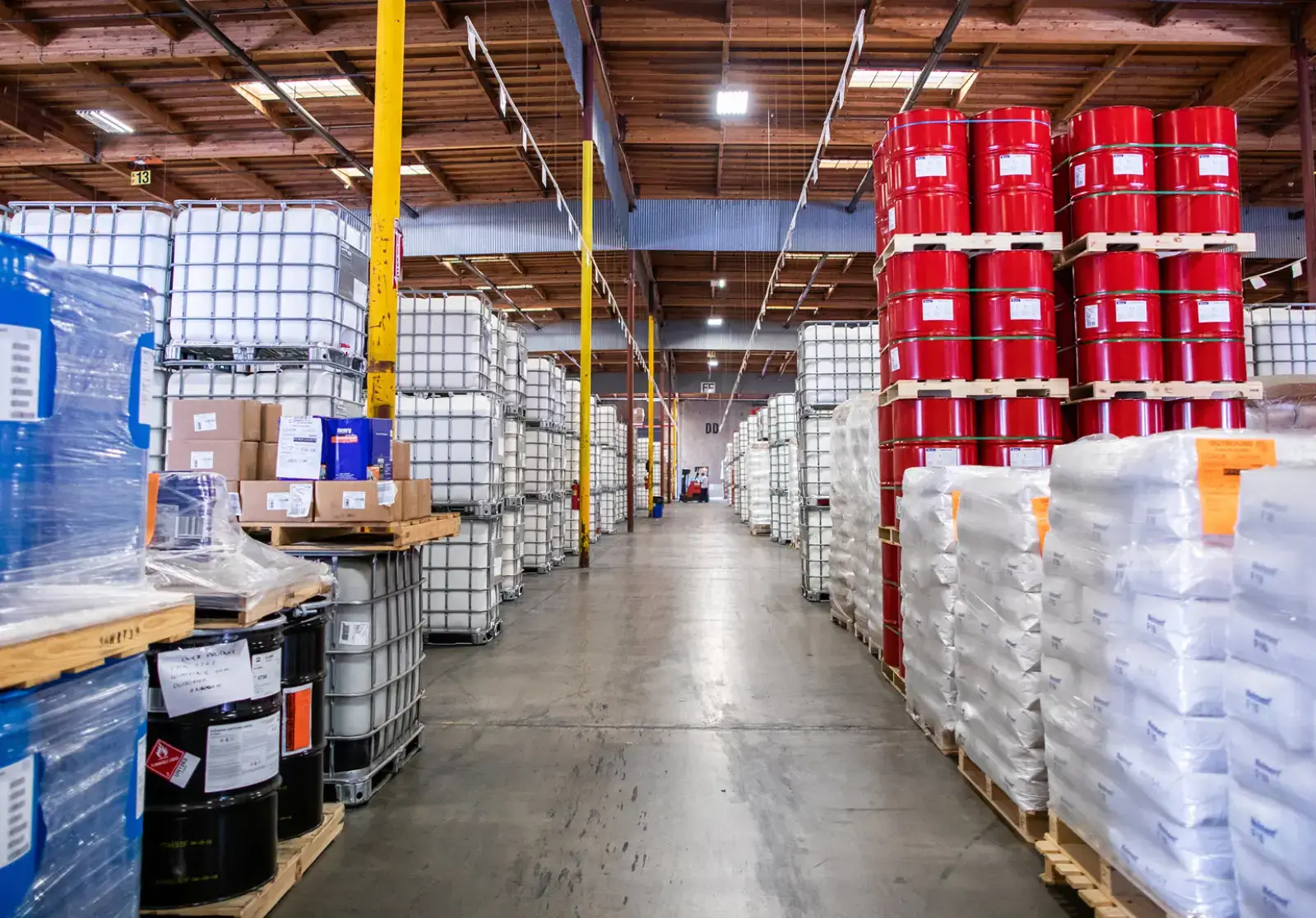
In 2026, leasing-specifically ready-built warehouses – remains the dominant strategy for 3PLs, E-commerce platforms (Shopee, TikTok Shop), and new market entrants.
The Strategic “Why”:
- Speed to Market: With the global supply chain facing constant disruptions (Red Sea crisis, trade tariffs), the ability to set up operations in 3-4 months is a massive competitive advantage compared to the 18-24 months required for construction.
- Cash Flow Protection (OPEX vs. CAPEX): Leasing keeps your capital liquid. Instead of sinking $5 Million into a facility, you use that cash for inventory, marketing, or technology (WMS/TMS).
- Flexibility: Most leases in Vietnam are 3-5 years. If your volume doubles (or halves) in 2027, you are not shackled to a building that no longer fits your needs.
The Hidden Costs:
- Rent Escalation: Most contracts in Vietnam include a clause for annual rent increases (typically 3-5%).
- Restoration Costs: When you leave, you must pay to return the warehouse to its original “bare shell” condition.
- Automation Limits: Installing heavy automation (like AS/RS) in a leased facility is risky. If the landlord terminates the lease, your sunk cost in installation is lost.
Fastrans Insight: Leasing is best for High-Growth/High-Volatility businesses. If you cannot forecast your volume for the next 5-7 years with 80% accuracy, do not build.
Strategy buying / building (The “Legacy” play)
“Buying” in Vietnam typically means acquiring Land Use Rights for 50 years and constructing your own facility. This is the game of manufacturing giants and stable logistics corporations.
The Strategic “Why”:
- Hedge Against Inflation: With the new Land Law 2024 forcing land prices to market levels, early movers who secured land are seeing massive asset appreciation. Your warehouse becomes a real estate asset on the balance sheet.
- Full Control & Customization: You can build a “Green Warehouse” (LEED/EDGE Certified) or a specialized Cold Storage facility without asking for permission. This is crucial for meeting ESG goals required by EU/US clients.
- Stable Long-Term Costs: Once built, your primary costs are maintenance and utilities. You are immune to the landlord’s rent hikes.
Cost Analysis 2026 (Estimation):
- Land Cost: ~$175/m² (Average blended rate).
- Construction Cost:
- Standard Steel Structure: $130 – $180 / m².
- High-Spec (Reinforced floor, high ceiling): $200 – $250+ / m².
- Permitting: The “soft cost” of obtaining construction permits and Fire Safety (PCCC) approval in Vietnam has become stricter and more expensive in 2025.
The Risk: Liquidity Trap: Selling a specialized industrial asset in Vietnam can take 12-24 months. It is not a liquid asset.
Regulatory Hurdles: The new Fire Safety regulations (QCVN 06:2022/BXD) are extremely strict. Many self-built projects face delays of 6-12 months just for inspection.
The “Middle Way”: Build-to-Suit
A trending strategy in 2026 is Build-to-Suit. Large developers (like BW Industrial, Mapletree, SLP) will build a facility to your exact specifications and lease it back to you for a long term (10-15 years).
- Pros: You get a custom facility (like owning) but pay with OPEX (like leasing). No massive upfront CAPEX.
- Cons: You are locked into a very long contract with heavy penalties for early exit.
Decision Matrix: Lease vs. Build
Use this matrix to guide your boardroom discussions
| Critical Factor | Choose LEASE If… | Choose BUILD If… |
| Time Horizon | < 5 Years | > 10 Years |
| Business Model | E-commerce, 3PL, FMCG Distribution | Heavy Manufacturing, Cold Chain, Specialized Chemical |
| Capital Priority | Working Capital (Inventory/Marketing) | Asset Accumulation (Real Estate) |
| Growth Predictability | High Volatility (Peaks & Troughs) | Stable / Predictable Growth |
| Tech Requirement | Standard Racking / Light Conveyors | Heavy Automation / Robotics / AS-RS |
| Location Strategy | Need to be near Populated Areas (Last Mile) | Need large land banks (Industrial Zones) |
Future-proofing: two trends you cannot ignore
Regardless of whether you decide to sign a lease or break ground on a new site, the definition of a “standard warehouse” in Vietnam has changed. To ensure your facility remains relevant and valuable in 2026 and beyond, you must address these two critical factors:
1. Green Logistics (ESG Compliance): from “nice-to-have” to “license to operate”
Gone are the days when “Green Logistics” was just a marketing buzzword or a slide in the annual report. In 2026, it is a hard entry barrier.
- The “Supply Chain Pressure”: Global giants sourcing from Vietnam—such as Nike, Apple, Samsung, and Lego—have aggressive Net-Zero targets. They are trickling these requirements down to their LSPs (Logistics Service Providers). If your warehouse cannot prove its carbon efficiency, you risk being cut from their supply chain entirely.
- If You Are Building:
- Do not settle for local standards. You must aim for international certifications like LEED (Gold or Silver) or EDGE Advanced.
- This involves investing in skylights for natural lighting, high-performance insulation materials to reduce HVAC load, and rainwater harvesting systems.
- The Payoff: Beyond compliance, “Green Buildings” in Vietnam are currently commanding a resale value premium of 10-15% over traditional warehouses.
- If You Are Leasing:
- Scrutinize the landlord’s commitment to renewable energy. Prioritize “Eco-Industrial Parks” (like VSIP III or DEEP C) that provide Rooftop Solar Power purchasing agreements.
- Check for a “Green Lease” clause: Does the landlord allow you to install energy-monitoring IoT sensors? Do they handle waste treatment sustainably?
- Remember: Paying a slightly higher rent for a Green Warehouse is cheaper than losing a key contract because you failed an ESG audit.
2. Automation readiness: solving the labor & efficiency equation
The era of cheap, abundant manual labor in Vietnam is ending. With the minimum wage hiking again in 2025 and industrial zones facing localized labor shortages, relying solely on forklifts and manual picking is a risky strategy. Your warehouse must be physically built to host the workforce of the future: Robots.
- The “Super-Flat” Requirement (FM2 Flooring):
- Standard concrete floors are uneven. To a human forklift driver, it’s a bump; to an Autonomous Mobile Robot (AMR) or a high-reach turret truck, it’s a safety hazard that causes shutdowns.
- Whether leasing or building, insist on FM2 (Special Flatness) flooring standards. This ensures your floor is perfectly level, allowing high-bay racking systems and automated robots to operate at top speed without risk of tipping or sensor errors.
- Power & Connectivity infrastructure:
- Automation eats electricity. A fleet of 50 AGVs (Automated Guided Vehicles) charging simultaneously requires a robust electrical load that older warehouses simply cannot support.
- Furthermore, automation dies without data. Ensure the facility is designed with 5G-ready infrastructure and fiber-optic backbones to support the IoT ecosystem (sensors, cameras, WMS real-time tracking) without “dead zones.”
- The Bottom Line: A warehouse built today without automation readiness is a warehouse that will be obsolete by 2030. Don’t build a box for storage; build a machine for throughput.
Conclusion: The verdict from Fastrans
In the North (Hanoi/Hai Phong), where land prices are rising fastest but supply is still available, Building is a strong option for manufacturing firms looking to secure a base for the next 20 years.
In the South (HCMC/Binh Duong), where land is scarce and exorbitantly expensive ($200+/m²), Leasing (or BTS) is the smarter financial move for logistics companies. It preserves your cash flow to fight the fierce battle for market share.
Final Advice: Do not look at the rental price alone. Look at the Total Cost of Operation. A cheap warehouse with poor access roads, no fire safety compliance, or far from the port will cost you double in transportation and risk penalties.